


Some of that change is genuinely good news for shoppers. Checkout is faster, personalization is sharper, and returns are easier than they used to be. Some of it is trickier. Scammers now have access to the same AI tools that legitimate retailers use, which means a fake store can look just as polished as a real one. If you want to shop smart this year, whether that’s grabbing a deal during a flash sale or doing your regular grocery run, it helps to understand what’s actually changed and what to watch out for.
This guide walks through the state of online shopping in 2026, the biggest risks to know about, and a practical checklist you can use before you hit “buy” on your next order.
The State of Online Shopping in 2026
Online shopping continues to grow year over year, and it now makes up a meaningful share of total retail spending in most developed markets. A few things are worth knowing as background before we get into the practical tips.
- Online sales now account for roughly a fifth of total retail purchases in many major markets, and that share has been climbing steadily for years.
- Mobile devices are responsible for the majority of online purchases in most regions, with digital wallets and saved payment methods making checkout faster than ever.
- Shoppers are increasingly comfortable buying across borders, with a growing share of online orders shipped internationally rather than from a domestic retailer.
- Return volumes remain high industry-wide, which is part of why more retailers are experimenting with tighter return windows and restocking fees.
None of this means online shopping is riskier than it used to be, exactly. It means the landscape is more crowded, more automated, and more competitive, which is exactly the environment where a little extra awareness pays off.
How to Spot and Avoid Fake Online Stores
This is probably the single most important section of this guide, and it’s the one that has changed the most recently. Scam shopping sites used to be relatively easy to spot: broken English, sketchy design, obviously stolen photos. That’s no longer reliable. AI tools can now generate a full storefront, complete with polished product photography, believable product descriptions, and even fabricated customer reviews, in a matter of hours.
That doesn’t mean fake stores are undetectable. It just means the old checklist needs an update.
Red Flags to Watch For
- The deal is dramatically too good. A well-known brand item marked down 70 percent or more is far more likely to be a scam or a counterfeit than a genuine clearance sale.
- The domain is brand new. A quick WHOIS lookup can show you when a site was registered. A “well-established” boutique that registered its domain last month is worth a second look.
- Product photos look copied or inconsistent. Try a reverse image search on a product photo. If the exact same image shows up on ten unrelated websites, that’s a strong signal.
- Reviews feel generic or oddly uniform. Watch for reviews that repeat the same phrases, lack any specific detail about the product, or were all posted within days of each other.
- There’s no real way to contact the company. Legitimate retailers list a physical address, a working phone number, or at least a responsive support channel. A contact form that seems to go nowhere is a warning sign.
- Checkout pushes unusual payment methods. Be cautious of any store that asks you to pay by wire transfer, cryptocurrency, or a payment app like Zelle instead of a credit card. These methods offer little to no fraud protection.
- Urgency is the whole pitch. Countdown timers, “only 2 left in stock,” and flashing “sale ends tonight” banners are classic pressure tactics designed to stop you from thinking it through.
Simple Habits That Protect You
- Shop from links you searched for yourself rather than ones in unsolicited texts or emails, even ones that look like they’re from a carrier or a brand you know.
- Pay with a credit card rather than a debit card or bank transfer whenever possible, since credit cards generally offer stronger chargeback protection.
- Use a password manager and unique passwords for shopping accounts, so a breach at one retailer doesn’t put your other accounts at risk.
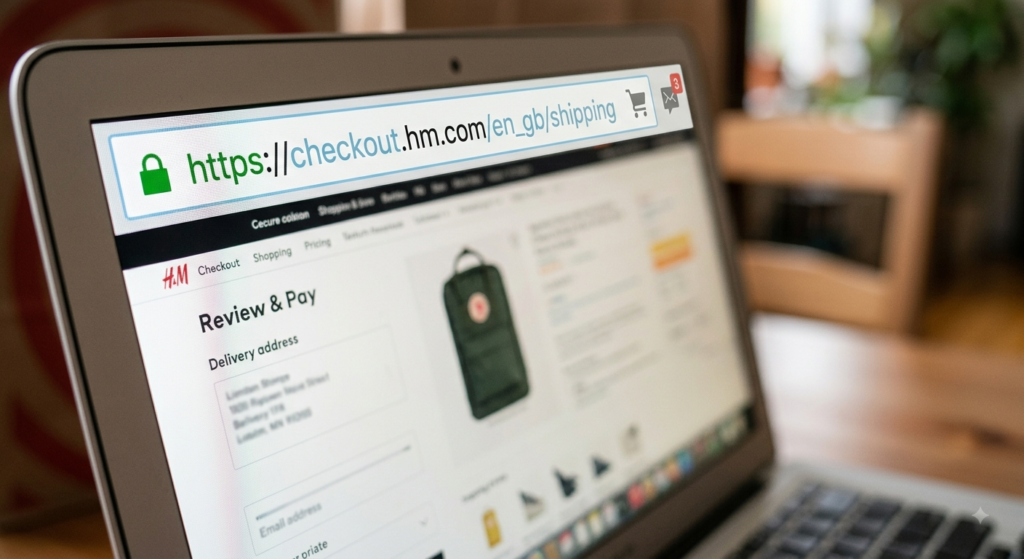
- Check for a padlock icon and “https” in the address bar as a baseline, but remember this only confirms an encrypted connection, not that the seller is legitimate.
- When in doubt, search the store’s name along with the word “scam” or “reviews” before you buy.
AI Is Changing How People Shop, For Better and Worse
Artificial intelligence has become a normal part of the shopping experience rather than a novelty. Product recommendations, chatbot assistants, and AI-generated summaries of customer reviews now influence a large share of purchase decisions. Used well, this can genuinely save you time. An AI assistant that summarizes fifty reviews into a few honest bullet points, or that helps you compare specs across three similar products, is a real convenience.
The catch is that AI-generated recommendations are not automatically trustworthy just because they sound confident and personalized. A chatbot can be fed misleading product data, and some so-called “deal finder” tools are really just advertising placements dressed up as neutral advice. A few practical habits help here:
- Treat AI product recommendations the way you’d treat a stranger’s opinion online: useful as one data point, not the final word.
- Cross-check anything an AI tool tells you about pricing, especially historical “lowest price ever” claims, against an independent price tracker.
- Be skeptical of AI-generated “reviews” or testimonials that sound polished but light on specific, verifiable detail.
- Remember that AI shopping agents that place orders on your behalf still need clear boundaries. If you use one, set spending limits and review orders before they’re finalized whenever that option is available.
Buy Now, Pay Later: What to Know Before You Click
Buy now, pay later options are everywhere at checkout now, often sitting right next to the regular payment button. They can be a genuinely useful way to spread out a larger purchase, but they’re also easy to lose track of, especially if you’re using more than one BNPL service across different stores.
A few things worth understanding before you use one:
- Missed BNPL payments can come with late fees, and depending on the provider and your history, may also affect your credit in ways a standard credit card purchase might not.
- It’s easy to underestimate how many BNPL plans you’re juggling at once when each individual payment feels small.
- Not all BNPL providers report to credit bureaus the same way, so read the terms rather than assuming it works like a typical installment plan.
- Some retailers use it as a psychological nudge to get you to spend more than you would if you saw the full price upfront. It’s worth asking yourself whether you’d still want the item at its full price paid immediately.
This isn’t financial advice, and the right approach depends on your own budget and circumstances. If you’re unsure whether a BNPL plan makes sense for a particular purchase, it’s worth reading the provider’s terms carefully or speaking with a financial advisor before committing.
Mobile Shopping, Digital Wallets, and Faster Checkout
More purchases now happen on a phone than on a desktop computer in most markets, and digital wallets have become the default payment method for a large share of online shoppers. This shift has made checkout genuinely faster, sometimes down to a single tap thanks to saved cards and biometric confirmation.
That convenience comes with a tradeoff worth knowing about: the faster checkout is, the less time there is to catch a mistake. A few habits help balance speed with control.
- Double check the shipping address saved in your wallet before confirming an order, especially after moving or traveling recently.
- Review your order summary before the final tap, since one-click checkout can make it easy to miss an added warranty, insurance add-on, or subscription upsell.
- Keep your phone’s operating system and shopping apps updated, since digital wallets rely on device-level security features.
- Consider using a dedicated shopping card or a virtual card number for online purchases, so a compromised retailer doesn’t expose your primary card.
Comparing Common Online Payment Methods
| Payment Method | Speed at Checkout | Fraud Protection | Good For |
|---|---|---|---|
| Credit Card | Fast | Strong, with chargeback rights | Most purchases, especially higher value items |
| Digital Wallet (linked to credit card) | Fastest | Strong, plus device level security | Repeat purchases and mobile checkout |
| Debit Card | Fast | Weaker, pulls directly from your bank account | Small, low risk purchases from trusted retailers |
| Buy Now, Pay Later | Fast | Varies by provider | Planned, larger purchases you can budget for |
| Bank Transfer or Wire | Slow | Minimal to none | Generally best avoided for retail shopping |
Social Commerce and Influencer Shopping
A significant share of shoppers now say social media directly influences what they buy, particularly in categories like fashion, beauty, and home goods. Livestream shopping events and shoppable posts have turned platforms like TikTok and Instagram into genuine sales channels rather than just discovery tools.
This is a fun and often convenient way to shop, but it’s worth applying the same scrutiny you’d use anywhere else:
- An influencer recommending a product doesn’t guarantee it’s authentic, well made, or accurately described. Sponsored content isn’t the same as independent testing.
- Be cautious about checking out through unfamiliar in-app storefronts. Where possible, verify the seller is legitimate before entering payment details.
- Screenshots of “reviews” shared in a post or comment section can be faked easily. Look for reviews on the actual product listing instead.
[Image suggestion: A phone screen showing a shoppable social media post with a product tag. Suggested alt text: “shoppable social media post showing product tag for social commerce shopping”]
Sustainability and Ethical Shopping Considerations
A growing number of shoppers say they factor sustainability into their buying decisions, and more brands are responding with claims about eco-friendly packaging, ethical sourcing, and carbon-neutral shipping. These claims can be genuinely meaningful, but they can also be vague marketing language with little behind them, a practice often referred to as greenwashing.
If sustainability matters to you when you shop, a few practical steps can help:
- Look for specific, verifiable claims rather than broad terms like “eco-friendly” with no supporting detail.
- Check whether a brand references a recognized third-party certification rather than a badge it created itself.
- Consider the full picture, including how an item is shipped and packaged, not just how it’s marketed.
Augmented Reality, Virtual Try-On, and Subscription Commerce
Two other trends are worth knowing about, even if they feel less urgent than scam prevention. The first is augmented reality shopping. A growing number of retailers, especially in fashion, beauty, and home goods, now let you virtually try on clothing, preview makeup shades, or place a piece of furniture in your actual living room using your phone’s camera. It’s a genuinely helpful way to reduce the guesswork that leads to returns, though it’s worth remembering that lighting, camera angles, and screen calibration can still make colors and fit look slightly different in person.
The second is subscription commerce. Recurring boxes and auto-replenishment subscriptions have expanded well beyond razors and coffee into personal care, pet supplies, and specialty foods. These can be convenient and sometimes cheaper per unit than one-off purchases, but they’re also easy to forget about entirely. A few habits help:
- Set a calendar reminder a few days before any subscription renews, especially during a free trial period.
- Check how to cancel before you sign up. If a retailer buries its cancellation flow behind several confusing steps, that’s worth factoring into your decision.
- Periodically review your bank or credit card statement for recurring charges you no longer recognize or use.
Cross-Border Shopping and Customs Surprises
Buying directly from an overseas retailer or marketplace has become increasingly common, and it can be a great way to find unique products or better prices. It also comes with a few extra considerations that domestic shopping doesn’t:
- Customs duties, import taxes, and handling fees may apply depending on your country and the value of the order, and these are sometimes charged separately after the item ships rather than at checkout.
- Shipping times are often longer and less predictable, so cross-border orders aren’t ideal for anything time-sensitive.
- Return shipping across borders can be expensive or impractical, so it’s worth reading the retailer’s international return policy specifically, not just assuming it matches domestic terms.
- Sizing standards, electrical voltage, and product certifications can differ by country, which matters for clothing, electronics, and anything that plugs in.
Public Wi-Fi, Shared Devices, and Everyday Security Habits
It’s easy to forget basic digital hygiene once checkout feels this fast and familiar. A few habits are still worth keeping, especially if you shop from your phone throughout the day:
- Avoid entering payment information while connected to public Wi-Fi, such as at a coffee shop or airport, unless you’re using a trusted VPN.
- Log out of shopping accounts on shared or borrowed devices rather than relying on the browser to forget you were signed in.
- Be wary of browser extensions that promise automatic coupon application or cashback. Some are legitimate, but others quietly track browsing activity or inject unwanted ads. Check reviews and permissions before installing one.
- Turn on purchase notifications from your bank or card issuer so you notice an unfamiliar charge quickly rather than weeks later.
Timing Your Purchase: When Prices Actually Drop
Discounts are constant year round now, which can make it hard to tell a genuine deal from routine pricing. A few patterns tend to hold up:
- Major sales events, like the ones clustered around the end of November, still tend to produce the deepest discounts of the year on electronics and big-ticket items.
- Seasonal categories, like winter coats or patio furniture, are usually cheapest at the end of their season rather than the start.
- Using a price tracking tool or browser extension that shows historical pricing can help you tell whether a “sale” price is actually lower than what the item has sold for recently.
- Signing up for a retailer’s email list sometimes unlocks a first-order discount, though it’s worth weighing that against the marketing emails you’ll receive afterward.
Smart Return and Refund Policies to Check Before You Buy
Returns remain one of the most overlooked parts of online shopping, and policies vary a lot more than most shoppers assume. Some retailers have tightened their return windows or added restocking fees in response to high return volumes, so it’s worth checking the policy before you buy, not after something arrives and doesn’t fit.
Before completing a purchase, it’s worth confirming:
- How long you have to initiate a return, and whether that clock starts at order date or delivery date.
- Whether return shipping is free or comes out of your refund.
- Whether you’ll receive store credit, a refund to your original payment method, or an exchange only.
- Whether the item needs original packaging or tags attached to qualify.
- Whether the retailer supports drop-off returns at a nearby location, which is increasingly common and often more convenient than mailing an item back.
A Practical Checklist Before You Buy Online
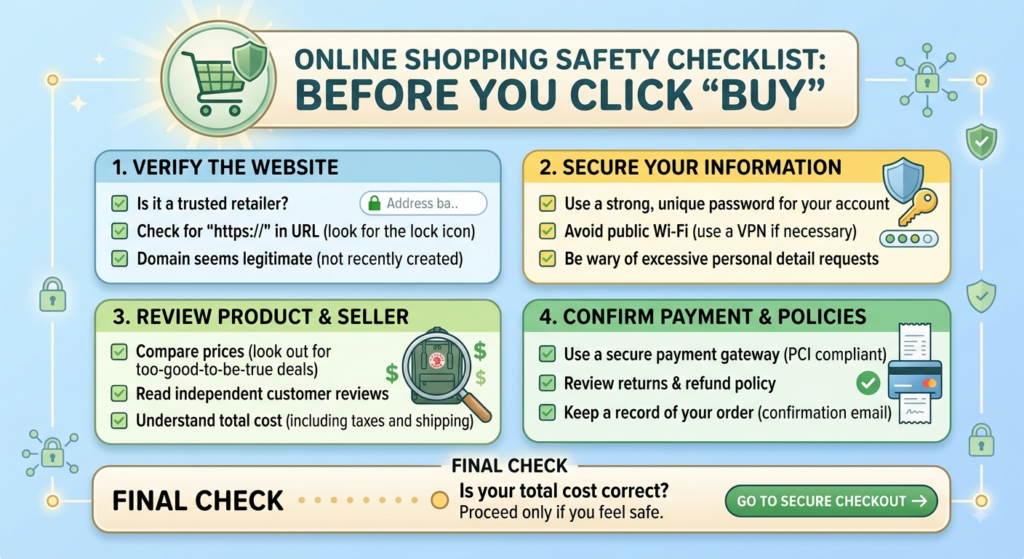
If you want a fast version of everything above, run through this list before you check out on any new site:
- Search the retailer’s name plus “reviews” or “scam” before entering payment details on an unfamiliar site.
- Reverse image search a product photo if the deal seems unusually good.
- Pay with a credit card or a trusted digital wallet rather than a wire transfer, crypto, or a peer-to-peer payment app.
- Read the return and refund policy, not just the shipping estimate.
- Check the total price, including shipping and any add-ons, before assuming the advertised price is final.
- Slow down if a page is pushing urgency with countdown timers or “only X left” messaging.
- Verify that a discount code, coupon, or “deal” is genuinely active rather than assuming it works just because it’s listed on a coupon site.
- Use a unique password and enable two-factor authentication for any shopping account that saves your payment details.
- Keep a record of your order confirmation and tracking information in case you need to dispute a charge later.
- If something feels off, whether it’s the pricing, the reviews, or the checkout flow, trust that instinct and shop elsewhere.
Frequently Asked Questions
How can I tell if an online store is legitimate?
Look for a real physical address or working contact information, check how recently the domain was registered, read reviews from outside the site itself, and be cautious of prices that seem far below what the item normally costs. No single sign is definitive on its own, so weigh a few of these together.
Is it safe to save my card details on shopping websites?
Saving a card can be reasonably safe on retailers with strong security practices and two-factor authentication, but it does increase your exposure if that retailer is ever breached. Using a digital wallet or a virtual card number can reduce that risk while still keeping checkout fast.
What’s the safest way to pay for something online?
Credit cards generally offer the strongest fraud and dispute protections for online purchases. Digital wallets linked to a credit card combine that protection with added device level security. Wire transfers, cryptocurrency, and peer-to-peer payment apps typically offer little to no recourse if something goes wrong.
Are Buy Now, Pay Later plans a good idea?
They can be a useful budgeting tool for a planned, larger purchase, but they’re easy to lose track of if you’re using several at once, and missed payments may carry fees or affect your credit depending on the provider. It’s worth reading the specific terms before you commit, and this isn’t financial advice for your individual situation.
How do I know if a “limited time deal” is actually a good price?
Use an independent price history tool to check whether the current price is actually lower than what the item has sold for recently. Retailers sometimes inflate a “was” price shortly before a sale to make the discount look bigger than it is.
What should I do if I think I’ve been scammed while shopping online?
Contact your card issuer as soon as possible to dispute the charge, change your password on that site and anywhere you reused it, and report the site to your local consumer protection agency. Acting quickly generally improves your chances of recovering your money.
Final Thoughts
Shopping online in 2026 is faster, more personalized, and more convenient than it’s ever been, but it also asks a bit more of you as a shopper. The tools that make checkout effortless are the same tools scammers use to make a fake store look real. A little bit of healthy skepticism, a few smart habits around payment and reviews, and a quick check of the return policy before you buy can go a long way toward making sure your next order is a good one.
