

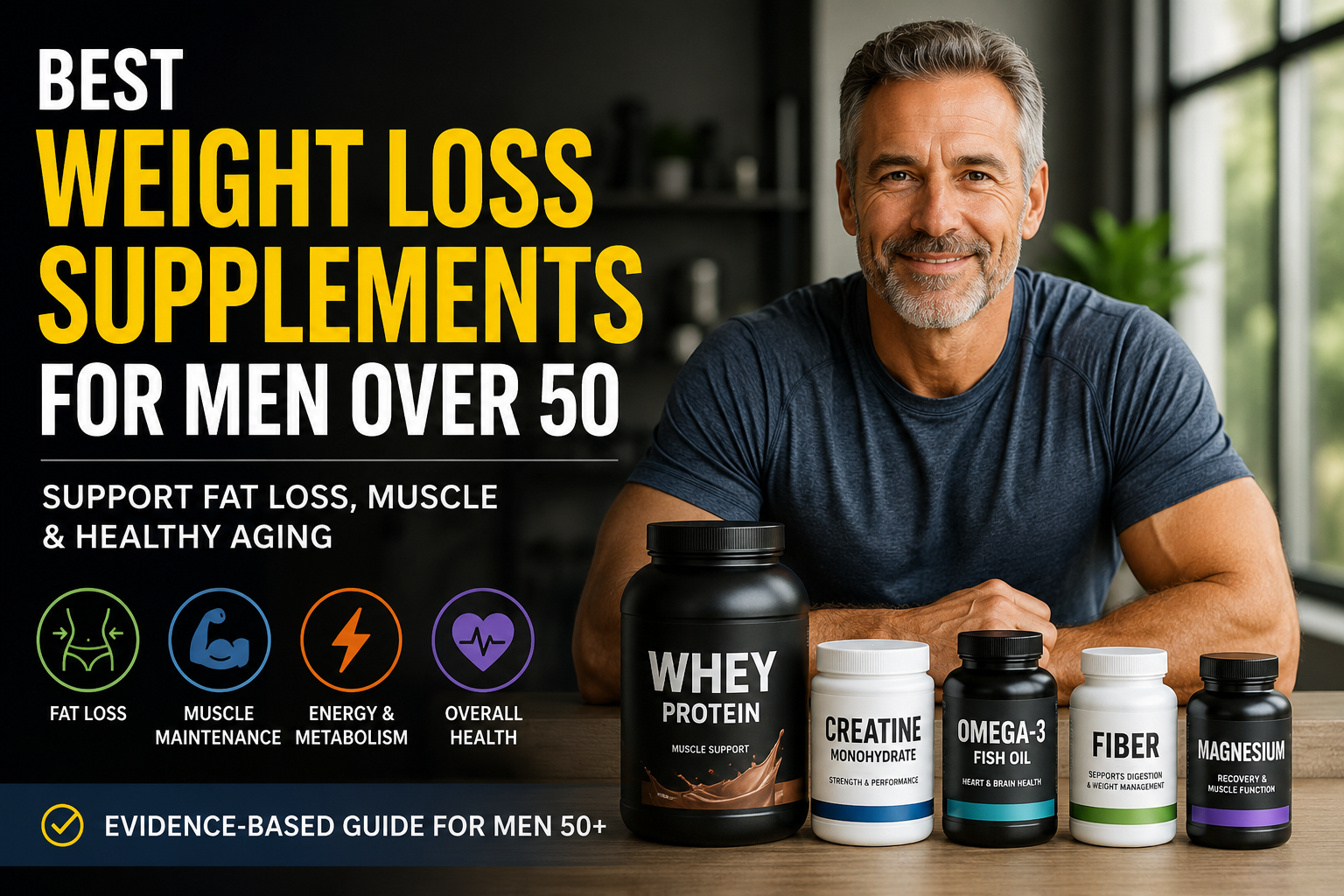
Before diving in, one thing needs to be said plainly: no pill, powder, or gummy replaces a solid diet, regular strength training, and good sleep. Supplements are exactly that, supplemental. Used thoughtfully, though, some of them may help fill nutritional gaps, support muscle retention, and make it easier to stick with a healthy routine.
This guide is written for men who have already tried the generic advice and are looking for something more specific to their stage of life. Maybe you have noticed that the approach that worked in your 20s and 30s, cutting calories hard and hitting the treadmill, does not deliver the same results anymore. Maybe a recent physical brought up numbers you would rather not see again. Or maybe you are simply trying to be proactive about healthy aging before problems show up. Whatever brought you here, the goal of this article is to give you a clear, evidence informed starting point rather than another list of hyped up products with no substance behind them.
Why Weight Loss Works Differently After 50
Before picking a supplement, it helps to understand what is actually happening in your body. A few physiological shifts make weight management more complicated after your 50th birthday.
- Muscle loss speeds up. Age related muscle decline, known clinically as sarcopenia, affects roughly 8 to 13 percent of adults over 60, and the rate of muscle loss tends to accelerate once men reach their seventh decade of life. Less muscle means a slower resting metabolism, which makes fat gain easier and fat loss harder.
- Hormone levels shift. Testosterone naturally declines with age, which can affect energy, motivation, and body composition.
- Recovery takes longer. Joints, tendons, and connective tissue do not bounce back from workouts the way they did decades ago, which can make consistent exercise harder to maintain.
- Nutrient absorption changes. Vitamin B12 absorption in particular tends to decline with age, and low B12 has been linked to fatigue and reduced physical activity, both of which can work against weight management goals.
This is why the most useful supplements for men over 50 are not necessarily the ones marketed as fat burners. Often, the more valuable products are the ones that support muscle, energy, and overall metabolic health, which in turn make weight management more achievable.
There is also a psychological shift that tends to happen around this age. Many men in their 50s have spent decades chasing the scale, cycling through low carb phases, intermittent fasting trends, and the occasional detox cleanse. By now, most have figured out that extreme approaches rarely stick. That shift in mindset, toward sustainable habits over quick fixes, is actually a good thing, and it should carry over into how you evaluate supplements too. A product that promises to melt fat away in two weeks is speaking to the old mindset. A product that helps you train harder, recover faster, or eat in a way that keeps you satisfied is speaking to the mindset that actually produces lasting change.
What the Research Actually Says About Weight Loss Supplements
It is worth setting expectations here. According to the National Institutes of Health Office of Dietary Supplements, the evidence behind most weight loss supplement ingredients is limited, mixed, or based on small, short term studies. The FDA does not review dietary supplements for safety or effectiveness before they reach store shelves, and manufacturers are not required to prove their products work before selling them. That does not mean every supplement is useless, but it does mean healthy skepticism is warranted, and claims of dramatic or guaranteed results should be treated as a red flag rather than a selling point.
With that context in mind, here is an honest look at the categories of supplements that tend to show up most often in discussions of weight management for men over 50, along with what current research suggests about each one.
Top Supplement Categories Worth Considering
1. Protein Powder (Whey, Casein, or Plant Based)
Protein is arguably the single most useful supplement category for men over 50 who are trying to manage their weight. Adequate protein intake supports muscle protein synthesis, which becomes increasingly important as natural muscle loss accelerates with age. Maintaining muscle mass helps preserve resting metabolic rate, which can make weight management easier over the long run.
- Whey protein is quickly absorbed and pairs well with post workout recovery.
- Casein protein digests more slowly, which some men find helpful for curbing evening appetite.
- Plant based protein (pea, rice, or blended formulas) is a solid option for men who prefer to limit dairy or animal products.
Research suggests that combining protein supplementation with resistance training may help preserve fat free mass and improve strength in older adults, even those already dealing with age related muscle decline. Aim to get most protein from whole foods like eggs, fish, poultry, and legumes, and use a supplement to help close any daily gaps.
One practical reason protein powder earns a spot on this list is convenience. Many men over 50 juggle busy schedules, and hitting a daily protein target through whole food alone can be a challenge, especially at breakfast or after a late workout. A scoop of protein blended into oatmeal, yogurt, or a quick shake can make the difference between falling short and actually meeting your target. Interestingly, some research on collagen peptides combined with resistance training in older men with sarcopenia has shown improvements in muscle strength and body composition, suggesting that even less traditional protein sources may play a supportive role when paired with consistent training.
2. Creatine Monohydrate
Creatine has moved well beyond its reputation as a bodybuilding supplement. Current research on older adults suggests that creatine, particularly when combined with resistance training, may support muscle mass, strength, and physical performance as people age. Some studies also point to age related changes in how the body responds to creatine, since dietary creatine intake from meat tends to decline with age, which may make supplementation more relevant for older adults.
Creatine will not burn fat directly, but by supporting strength training performance and lean muscle retention, it can play a supporting role in a body composition focused routine. It is also one of the most studied and well tolerated supplements on the market, with a strong safety track record in healthy adults.
A common concern among men new to creatine is whether it causes water retention or kidney strain. In healthy adults without pre existing kidney disease, research has generally not shown creatine to be harmful to kidney function at standard doses, typically around three to five grams per day. Some initial water weight gain inside muscle cells is common and expected, and it is not the same as fat gain. As with any supplement, men with existing kidney conditions or those on medications that affect kidney function should check with their doctor before adding creatine to their routine.
3. Fiber Supplements
Fiber does a lot of quiet work for weight management. It supports satiety, helps regulate digestion, and may assist in maintaining healthy blood sugar and cholesterol levels. Most men fall well short of the recommended daily fiber intake, and a fiber supplement, such as psyllium husk or glucomannan, can help close that gap when whole food sources like vegetables, legumes, and whole grains are not enough.
Because fiber slows digestion and increases feelings of fullness, it may help reduce overall calorie intake without the restrictive feeling of a traditional diet.
If you decide to try a fiber supplement, ease into it gradually. Jumping straight to the full recommended dose can cause bloating or discomfort, especially if your current diet is relatively low in fiber. Increasing your intake over one to two weeks, while drinking plenty of water, tends to be far more comfortable and sustainable. Whole food sources should still make up the bulk of your fiber intake whenever possible, since foods like beans, oats, and vegetables bring along additional nutrients and antioxidants that a supplement cannot fully replicate.
4. Omega 3 Fatty Acids
Fish oil and other omega 3 supplements are frequently recommended for men over 40 and 50, not primarily as a weight loss tool, but for their broader cardiovascular and metabolic support. Some research suggests omega 3s may help support healthy triglyceride levels and reduce inflammation, both of which are relevant to metabolic health as men age. If you already eat fatty fish like salmon or sardines a couple of times per week, a supplement may be less necessary, but many men find it a convenient way to maintain intake.
5. Vitamin B12
This one rarely gets attention in weight loss marketing, but it deserves a mention. The body’s ability to absorb B12 from food naturally declines with age, and low B12 levels have been linked to fatigue and reduced physical activity. Since staying active is a cornerstone of healthy weight management, correcting a B12 deficiency, if one is present, may indirectly support movement and energy levels. A simple blood test through your doctor can confirm whether supplementation is actually needed.
6. Magnesium
Magnesium plays a role in hundreds of processes in the body, including sleep regulation, muscle recovery, and blood sugar metabolism. Poor sleep has been associated with disrupted appetite hormones and increased cravings, so some men find that a nighttime magnesium supplement supports better rest, which may indirectly support weight management goals. It is generally well tolerated, though very high doses can cause digestive upset.
7. Caffeine and Green Tea Extract
Caffeine remains one of the most consistently researched compounds for modestly boosting energy expenditure and supporting workout performance. According to guidance referenced by the FDA and the European Food Safety Authority, up to 400 milligrams of caffeine per day is generally not associated with safety concerns in healthy adults, though individual tolerance varies considerably, especially for men managing blood pressure or heart conditions. Green tea extract, which contains both caffeine and catechins, is often marketed similarly, though the effect size in human studies tends to be modest.
Men over 50 who are managing hypertension, arrhythmia, or heart disease should be particularly cautious with high dose caffeine or stimulant based fat burners and should check with a physician first.
It is also worth paying attention to hidden caffeine sources. A pre workout supplement, a fat burner, and a few cups of coffee can add up quickly without you realizing it, especially since many product labels list caffeine as part of a proprietary blend rather than a clear milligram amount. Tracking your total daily intake from all sources, including tea, energy drinks, and supplements, is a simple way to avoid overdoing it.
8. Multivitamins
A quality multivitamin is not a weight loss product in the traditional sense, but nutritional gaps can quietly undermine energy levels, workout recovery, and overall metabolic function. For men over 50, look for a formula specifically designed for this age group, since needs for calcium, vitamin D, and B12 shift compared to formulas designed for younger adults.
Comparison Table: Supplement Categories at a Glance
| Supplement | Primary Role | Best For | Things to Watch |
|---|---|---|---|
| Protein Powder | Supports muscle retention and satiety | Men strength training or under-eating protein | Check sugar content and total calories |
| Creatine Monohydrate | Supports strength and lean mass | Men doing resistance training | Stay well hydrated; consult a doctor with kidney concerns |
| Fiber | Supports fullness and digestion | Men with low vegetable or whole grain intake | Increase slowly and drink plenty of water |
| Omega 3s | Supports heart and metabolic health | Men with low fish intake | Can interact with blood thinning medication |
| Vitamin B12 | Supports energy and nerve function | Men with confirmed low levels | Get levels tested before supplementing |
| Magnesium | Supports sleep and recovery | Men with poor sleep quality | High doses may cause loose stools |
| Caffeine or Green Tea Extract | Supports energy and workout output | Men without heart or blood pressure concerns | Avoid stacking multiple caffeine sources |
| Multivitamin | Fills general nutrient gaps | Most men over 50 | Choose an age appropriate formula |
Supplements to Approach With Caution
Not every product on the shelf deserves a place in your routine, and some deserve outright suspicion. The FDA has repeatedly flagged weight loss products, especially those sold online or through unfamiliar retailers, that contain hidden and potentially dangerous ingredients not listed on the label. Past testing has uncovered undisclosed prescription drugs and banned stimulants in products marketed as “all natural,” some of which have been linked to serious cardiovascular events.
A few practical warning signs to watch for:
- Claims of rapid, dramatic weight loss with no diet or exercise required.
- Proprietary blends that do not disclose exact ingredient amounts.
- Products sold exclusively through social media ads or unfamiliar third party websites.
- Marketing language claiming the product is manufactured in an “FDA approved facility,” since the FDA does not actually approve manufacturing facilities in this way.
- “Natural” labeling used as a stand in for safety. Natural does not automatically mean safe, and some natural compounds carry real risks, particularly when combined with prescription medications.
Men over 50 are statistically more likely to be managing at least one chronic condition or taking a prescription medication, which raises the stakes for potential interactions. This is exactly why a conversation with a doctor or pharmacist before starting any new supplement is not just a formality, it is genuinely important, especially for anyone on blood pressure medication, blood thinners, or diabetes medication.
Past FDA testing has identified undisclosed substances in some weight loss products marketed online, including unapproved stimulants and, in certain cases, prescription drug ingredients not listed on the label. These findings are a reminder that a slick website or a flood of five star reviews is not proof of safety. If a product seems to be making promises that sound too good to be true relative to everything else on the market, that gap usually exists for a reason, and it is rarely a good one. Sticking with well known, established brands that publish third party test results is one of the simplest ways to reduce this risk.
What About GLP-1 Medications and Supplements?
GLP-1 receptor agonists have become one of the most talked about tools for weight management in recent years, and usage among adults aged 50 to 64 is now among the highest of any age group. These are prescription medications, not supplements, and they work through a different mechanism than anything sold over the counter. Some supplement brands have started marketing products as “GLP-1 support” or “natural GLP-1 boosters,” but it is worth being skeptical of these claims, since the clinical evidence supporting over the counter alternatives to prescription GLP-1 medications remains limited. If you are curious about GLP-1 therapy, that conversation belongs with your doctor rather than a supplement label.
How to Choose a Quality Supplement
Once you have identified a category that fits your goals, use these criteria to evaluate specific products.
Look for Third Party Testing
Seals from organizations like NSF Certified for Sport, USP, or Informed Sport indicate that a product has been independently tested for label accuracy and banned substances. This matters even more for men taking prescription medications, since it reduces the risk of hidden ingredients.
Check the Ingredient Amounts, Not Just the Names
A label that lists an ingredient without disclosing the actual dose, often hidden inside a “proprietary blend,” makes it impossible to know whether you are getting a clinically relevant amount or a token sprinkle.
Match the Product to a Real Goal
Instead of buying a product because it says “fat burner” on the label, work backward from what you actually need. If you struggle to hit your protein target, a protein powder solves that problem directly. If your workouts have plateaued, creatine may be more relevant than a stimulant blend.
Start With One Product at a Time
Introducing multiple new supplements simultaneously makes it difficult to know what is helping, what is doing nothing, and what might be causing side effects. Add one product, give it several weeks, and evaluate before adding another.
Talk to Your Doctor First
This is especially important for men managing high blood pressure, heart disease, diabetes, or kidney issues, or for anyone taking prescription medications regularly. Your doctor or pharmacist can flag potential interactions that are not obvious from a supplement label.
Building a Realistic Weight Management Routine
Supplements work best as a support system around habits that are already doing the heavy lifting. Here is a general framework that research consistently supports for men over 50:
- Prioritize protein at each meal. Aim for a source of protein at breakfast, lunch, and dinner to support muscle retention throughout the day.
- Strength train two to three times per week. Resistance training is one of the most effective tools for preserving muscle mass and supporting metabolic health as you age.
- Walk more. Simple daily movement, even outside of structured workouts, adds up significantly over time and supports overall calorie balance.
- Protect your sleep. Poor sleep is linked to increased hunger hormones and reduced willpower around food choices.
- Fill nutritional gaps with supplements, not shortcuts. Use supplements to support a plan that is already working, not to replace the plan altogether.
- Manage stress where you can. Chronic stress raises cortisol, which has been associated with changes in appetite and fat storage patterns, particularly around the midsection. This does not mean stress needs to be eliminated entirely, which is unrealistic for most people, but building in small recovery practices, whether that is a walk outside, time with family, or simply a consistent wind down routine before bed, can support the other habits on this list.
- Track progress beyond the scale. Body weight naturally fluctuates day to day due to water, sodium, and other factors. Many men over 50 find it more motivating and more accurate to track progress through measurements, how clothes fit, strength gains in the gym, and energy levels, rather than obsessing over a single number on the scale.
None of these habits require a subscription box or a monthly supplement haul to get started. In fact, most men see the biggest improvements simply by nailing the basics consistently for a few months before adding any supplements at all. Once those fundamentals are in place, a well chosen supplement or two can provide a genuine, if modest, edge on top of the work you are already doing.
Frequently Asked Questions
What is the best supplement for weight loss for men over 50?
There is no single supplement that works best for every man, since goals and health conditions vary. That said, protein powder and creatine tend to have the strongest research support for helping preserve muscle mass, which supports metabolism and makes weight management more sustainable as men age.
Can supplements alone help me lose weight after 50?
Research suggests that supplements work best alongside diet and exercise rather than as a standalone solution. Little evidence exists showing that any dietary supplement can produce meaningful, long term weight loss on its own.
Is creatine safe for men over 50?
Creatine monohydrate is one of the most researched supplements available and is generally considered safe for healthy adults, including older adults, particularly when used alongside resistance training. Men with existing kidney conditions should check with a doctor before starting it.
Do fat burners actually work?
Most stimulant based “fat burner” products rely primarily on caffeine and related compounds, and their effects tend to be modest at best. Some fat burner products have also been flagged by the FDA for containing undisclosed and potentially dangerous ingredients, so extra caution and research into third party testing is warranted before trying one.
Should I get my testosterone checked before starting a weight loss supplement?
If you are experiencing symptoms like persistent fatigue, reduced muscle mass, or low motivation alongside weight changes, it is reasonable to ask your doctor about a testosterone panel as part of a broader health checkup. This can help identify whether hormonal factors are playing a role, separate from what any supplement could address.
How long does it take to see results from weight loss supplements?
This varies by supplement and individual, and results are highly dependent on diet and exercise habits. Supplements that support muscle retention, like protein and creatine, are generally evaluated over a period of eight to twelve weeks alongside consistent resistance training, rather than expecting rapid change.
Are weight loss supplements regulated by the FDA?
Dietary supplements are regulated differently than prescription drugs in the United States. The FDA does not review supplements for safety or effectiveness before they go on sale, and manufacturers are responsible for ensuring their own products are safe and accurately labeled. The FDA can take action after a product reaches the market if it is found to be unsafe or fraudulently labeled.
Final Thoughts
The most effective approach to weight management after 50 is rarely found in a single bottle. The categories with the strongest research support, protein, creatine, fiber, and a few targeted micronutrients, tend to work by supporting the fundamentals: muscle retention, energy, digestion, and recovery. Be wary of anything promising fast, effortless results, verify third party testing where possible, and loop in your doctor before adding anything new, especially if you manage a chronic condition or take regular medication. Combined with consistent strength training, a protein forward diet, and quality sleep, the right supplements can be a genuinely useful part of a weight management plan built to last.
